A sound installation that lets people in a public space shape its sonic atmosphere together, by placing and moving stones.
DXARTS Media Lab, University of Washington, October 2026.
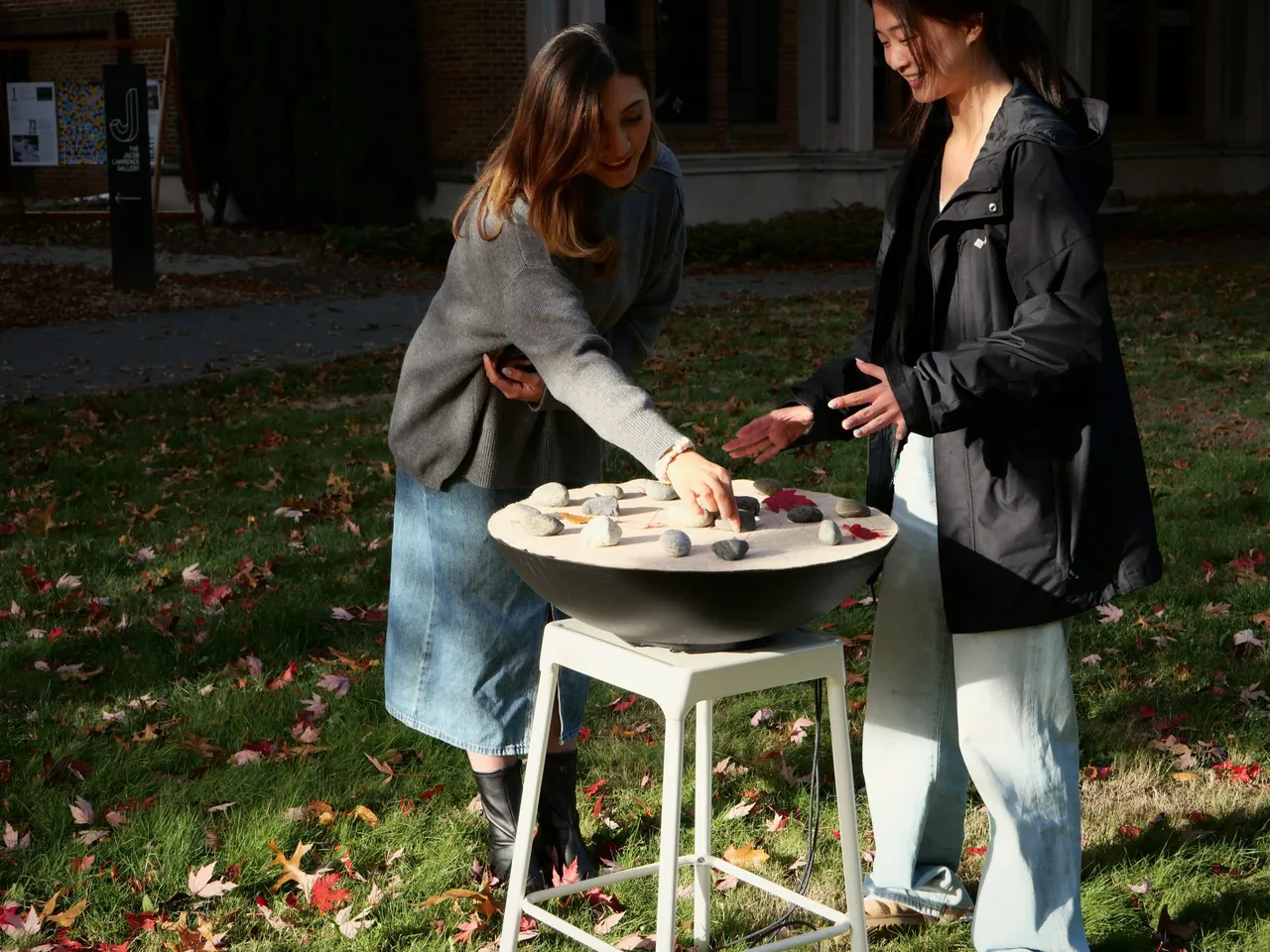
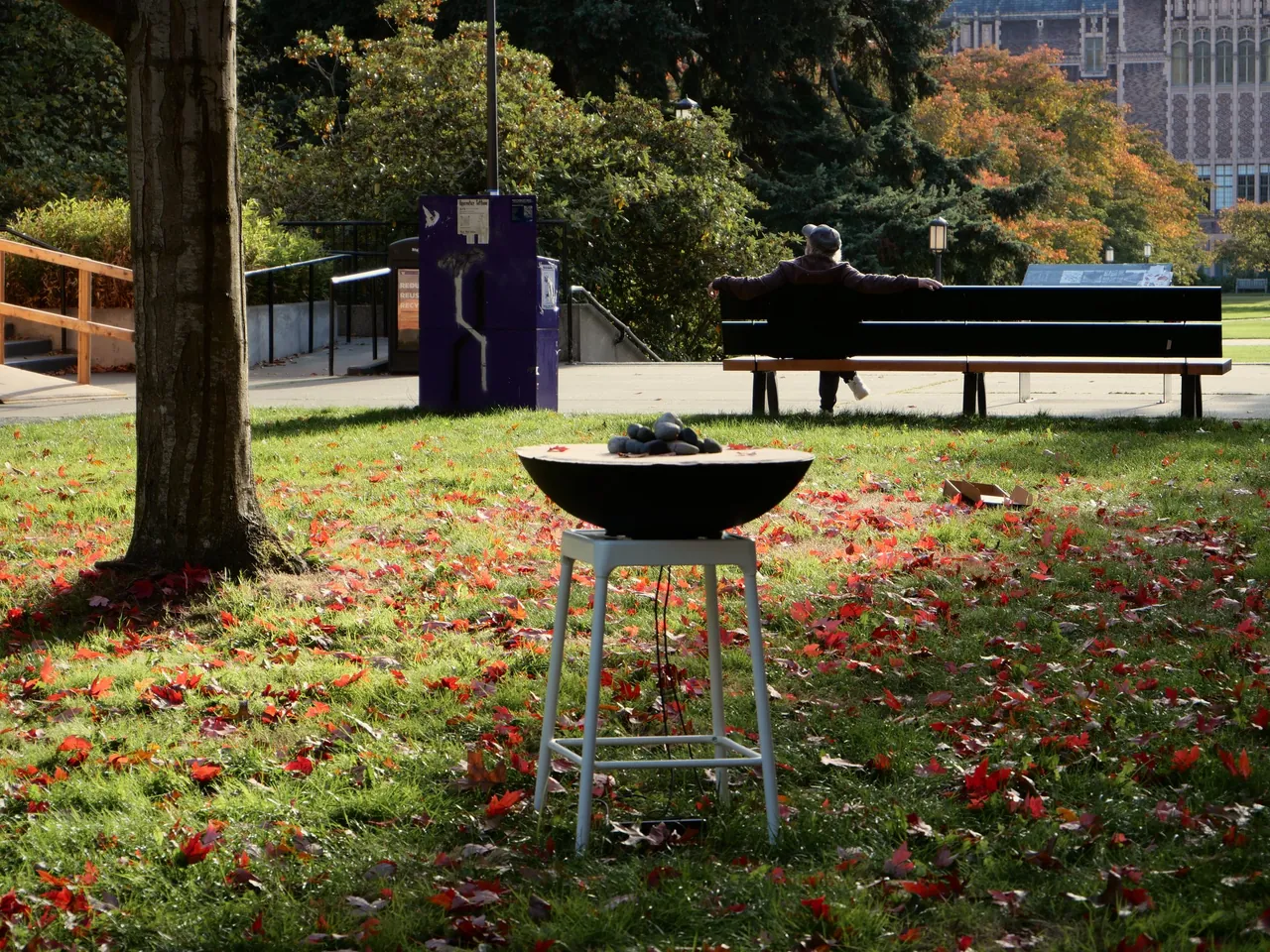
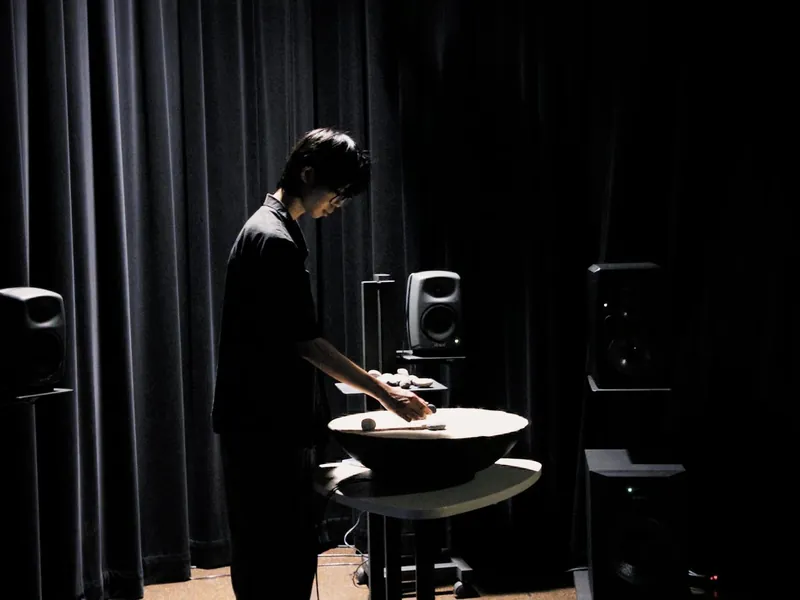
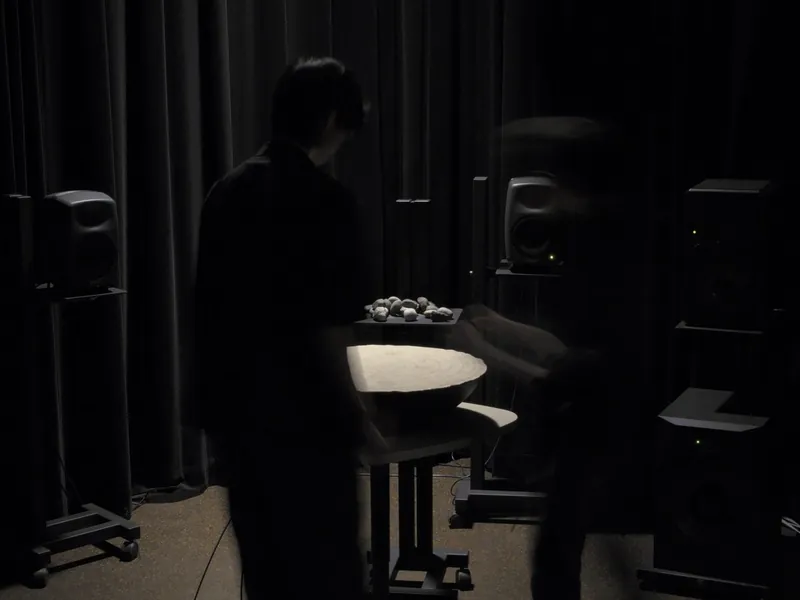
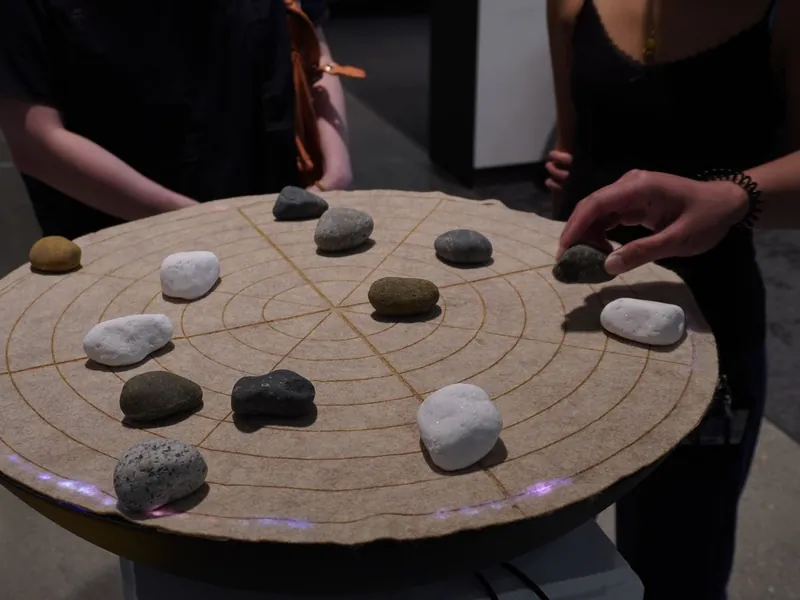
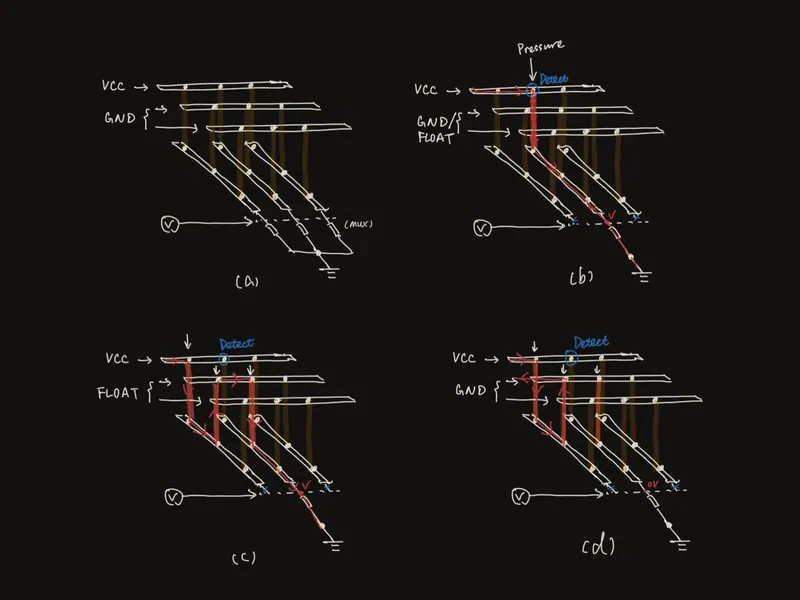
A round wool felt mat with natural stones on it, connected to the room's sound system. Pressure sensors detect the arrangement of the stones to generate ambient music in real time.
Anyone passing through or lingering can move the stones, gently changing the atmosphere of the entire room.
When you enter a public space, who decides the background music you hear?
Captive Audience
In the mid-20th century, began to thrive across America, finding its way into shops, offices, and factories. The central idea was to treat music as an environmental element that could be organized and managed to influence the atmosphere of a space, people's moods, and even .
Muzak
In 1934, the Muzak brand began offering commercial music services, and gradually spread into hotels, restaurants, factories, and offices. Its music had simple, soothing melodies and simple, predictable structures. The name Muzak combines “music” with Kodak, one of the most popular brands of the time. It later became so widespread that lowercase “muzak” turned into a byword for background music.
Muzak’s signature method was called Stimulus Progression. In factories, for example, music was arranged into 15-minute sequences, gradually progressing from calm to lively, in the hope of reducing workers’ fatigue and raising productivity.
Music came to be designed to act upon people and influence their behavior. There is a term for those who cannot escape it: the .
The Captive Audience
Starting in October 1949, Grand Central Terminal in New York broadcast Muzak and commercials over its public address system nonstop, from 7 a.m. to midnight. Travelers could neither walk away nor turn it off, and protests followed. In The New Yorker, E. B. White wrote that people were losing the right to decide whether to listen at all. Three years later, a similar dispute reached the U.S. Supreme Court: streetcars in Washington, D.C. were playing radio broadcasts, and passengers sued. The Court ruled for the transit company, but Justice Douglas wrote in his dissent: “The streetcar audience is a captive audience.”
In 1978, Brian Eno released his . In it, he criticized Muzak for imposing a homogenized stimulus on every space and everyone in it, blanketing each space’s own sounds and atmosphere, levelling out people’s natural rhythms, thus stripping away any genuine interest.
Music That Meets Itself
Eno recorded single notes from musicians and singers, turned them into tape loops of different lengths, and let them meet and combine on their own. So when each note in the music appears is something even Eno could not know in advance.
Eno proposed Ambient Music instead. He wanted music that coexists with its environment, draws on the acoustic character of the space itself, and leaves “a space to think.”
Music could now be made for spaces and the people in them, offering an open, free experience, as Eno put it: “as ignorable as it is interesting.”
University of Washington, October 2026.
The Curated Atmosphere
From Muzak to Ambient Music, we have kept rethinking how music should relate to people and their surroundings. Yet one thing seems never to have changed: the background music in the public spaces we move through every day is still designed and decided in advance by the owners and designers of the space, bestowed upon people there.
Music is not only something we hear, but also a part of what makes up the atmosphere of a space. When we enter a public space, we usually just receive an atmosphere that has already been designed for us.
But what if the atmosphere of a space could be shaped together by the people in it?
SoundMat – Shared Ambience
Starting from the idea of giving people greater agency in shaping the musical atmosphere of a space, we designed SoundMat.
Anyone passing through or lingering can move the stones, gently changing the atmosphere of the entire room.
University of Washington, October 2026.
Our design seeks to find the best balance between creative freedom and good listening: however the stones are placed, , whereas participants can still feel that each change is their own. No musical background is needed, what they need is just some curiosity, imagination, and willingness to explore.
Why It Always Sounds Good
SoundMat plays ambient music built on the pentatonic scale. However these five notes are stacked, they never form a harsh interval, so wherever the stones are placed, there are no “wrong notes.” Every few minutes, the key slowly shifts around the circle of fifths, so the music keeps changing without ever feeling abrupt.
Atmosphere is no longer played to people, but created by the people present. Together, they shape the Shared Ambience.
People are no longer passive receivers of atmosphere, but the ones who shape it. Move one stone, and hear that small gesture fill the whole room. The stone stays where it is, and so does the atmosphere. The next person receives what was left before, and shapes it for everyone who comes later. Their traces pervade the entire space.
University of Washington, October 2026.
Hanlin’s Design Notes
I think what really matters is the feeling and the atmosphere the whole thing creates. An art installation connects with its space and plays with the people passing by. Simply being there is an aesthetic in itself.
Seven in the evening. The lobby has no background music, only a low, round wooden platform with three black volcanic stones of different sizes. From beneath them comes a very slow sound, like the fading ring of a temple bell, mingling with the sandalwood in the air. A guest who has just checked in walks over. No one has told her what it is; she just likes the sound, and sets a nearby pebble at the edge of the mat. A faint layer of wind chimes joins in. She listens for a few seconds, then heads to her room. The pebble stays, the music goes on, and the staff are in no hurry to clear it: it is part of the lobby. The next morning, another staff member moves the stones, and today’s music is different from yesterday’s.
For the surface I want a soft pile fabric: it draws the eye, and feels warm and refined. For the things people place, river pebbles are the best choice. They vary naturally in weight and size, feel good in the hand, and suit refined settings.
Restrained, natural, refined. A light top over a dark body makes the surface seem to float, and keeps attention on the surface you play. As a whole it looks less like an electronic product than a piece of furniture or an artwork.
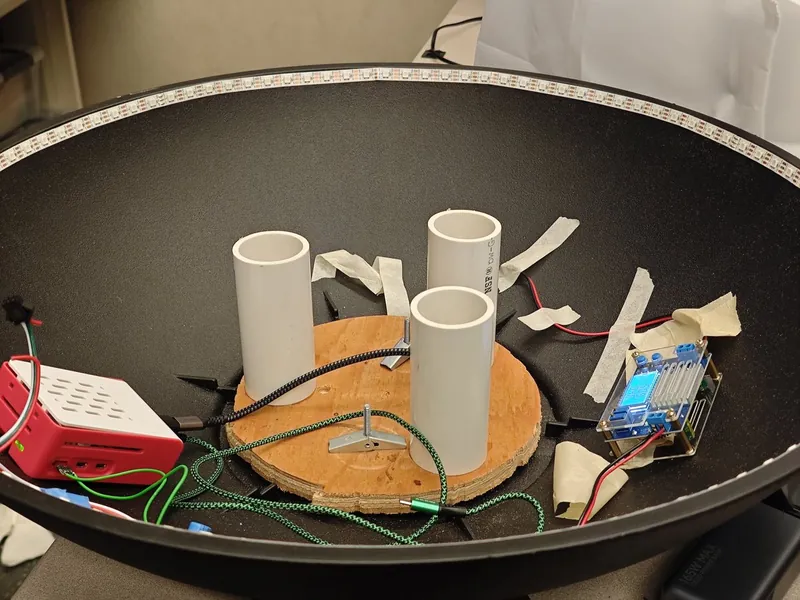
All the electronics have to hide inside the cavity, with as few cables coming out as possible. We use just one power cable and one audio cable.
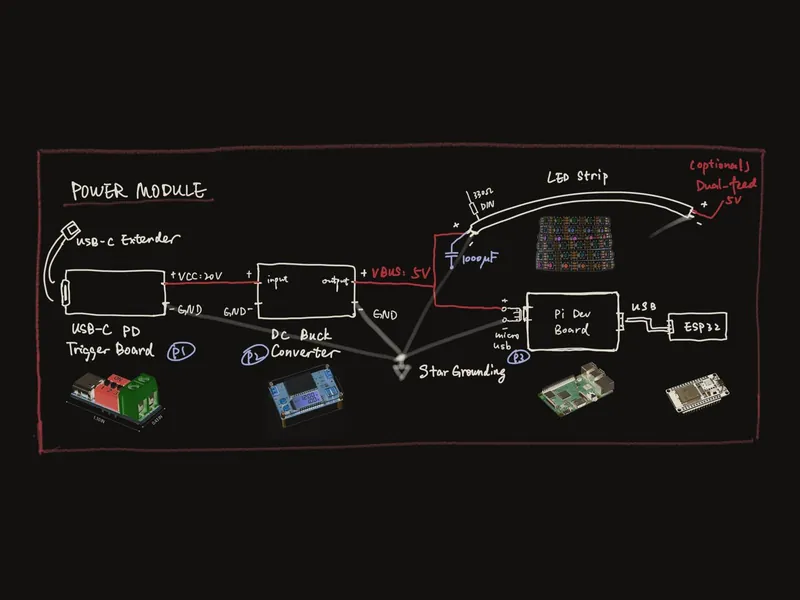
As an art installation used outdoors, say in a plaza, it should ideally solve its own power, with no wall socket. USB-C with Power Delivery does this: it runs from a charger or from a fast-charging power bank.
Adjusting changes the parameters of music that already exists, such as the volume, timbre, EQ or tempo of a piece. Generating creates new elements in real time for every action, such as notes, percussion, harmony or musical fragments.
In SoundMat, generation dominates completely. People are not adjusting someone else’s music; they are making their own.